AI design tools for brands in 2026 are not coming for creative professionals. They are coming for the ones who refuse to adapt to them.
That is not a motivational statement. It is what is actually happening in the creative industry right now.
The designers and studios charging the most are not always the ones with the most years of experience. They are the ones who understood early how to use AI tools to produce better work, faster, while still thinking strategically about the result.
Here is what is genuinely changing and what is not changing at all.
What AI Design Tools for Brands Are Actually Good At
Generating Visual Concepts Quickly
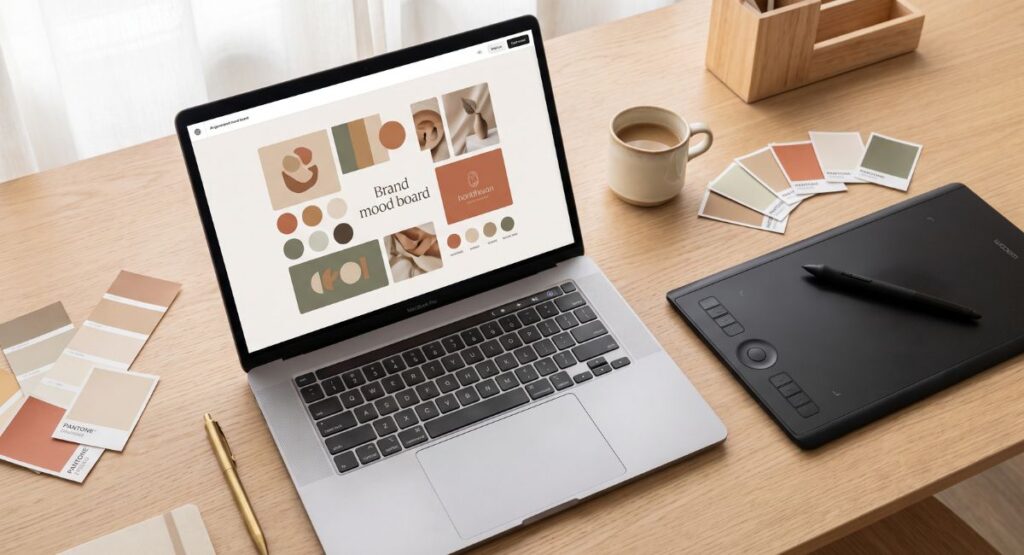
Before tools like Midjourney existed, a designer would spend hours researching references, building mood boards, and sketching initial directions before touching design software.
That process now takes 20 minutes.
You describe the visual direction, generate multiple references, pick the strongest one, and begin actual design with a clear visual target already in front of you.
The time saved is not in the final output. It is in the thinking phase. And the thinking phase used to consume 30 to 40 percent of any project timeline.
Product Photography Without a Studio
This is the change hitting e-commerce brands right now and most of them do not know it yet.
AI tools can now generate photorealistic product visuals, lifestyle shots, and campaign imagery from a simple product photo and a written description.
A brand used to need a studio, a photographer, a model, props, and a full day of shooting to produce a set of campaign images. That same output can now be produced in hours using AI photo tools, at a fraction of the cost.
For brands that are growing but not yet at a budget where traditional production makes sense, this is not a compromise. It is a genuine advantage.
Producing Content at Scale
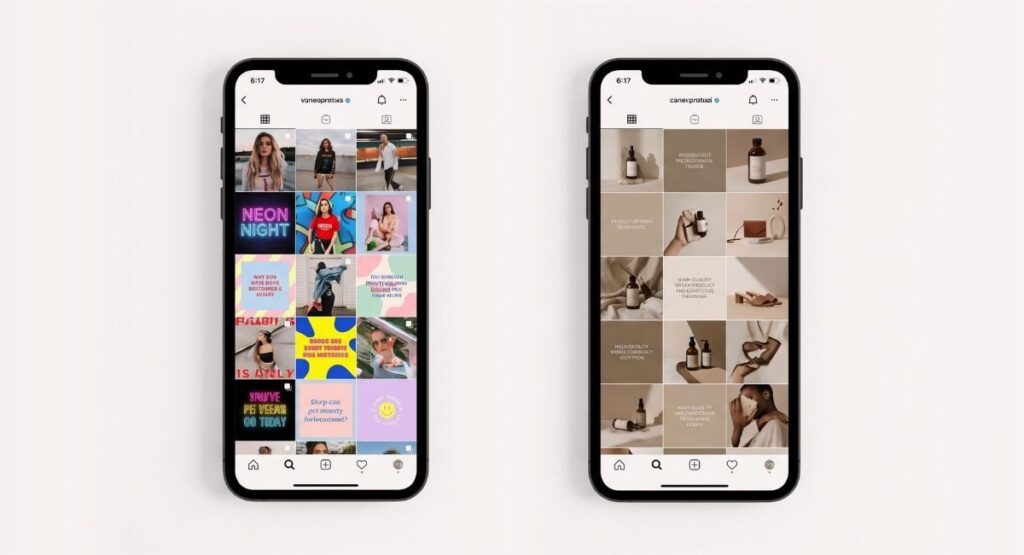
Social media demands volume. A brand posting three times a week needs at least 150 pieces of visual content a year, minimum.
That volume used to require either a large team or a significant compromise on quality.
AI-assisted creative production means a studio can now produce that volume without inflating cost or dropping the quality bar. The visual thinking still comes from a human. The production speed now comes from the tools.
AI Video and Motion Content
Short-form video is the highest performing content format across every major platform right now.
Tools like Runway and HeyGen allow studios to produce cinematic brand videos, AI UGC-style content, and product ads without a film crew or a large production budget.
A 15 second product video that builds trust and communicates quality used to cost thousands. With the right AI workflow it now costs a fraction of that and delivers in days instead of weeks.
For growing brands competing against larger budgets, this levels the field in a way that was not possible two years ago.
What AI Cannot Do for Your Brand
Understand Your Brand
AI does not know that your audience is trust-driven and that a dark edgy visual direction will lose them before they read a single word.
AI does not know that your competitor just rebranded in a similar direction and that going the same way makes you invisible.
AI does not know anything about your market, your audience psychology, or the specific perception problem your brand needs to solve.
That knowledge is strategy. And strategy is still entirely human.
Make Creative Decisions That Matter
When a client looks at five logo concepts and asks which one will actually work for their business, AI cannot answer that question with any real authority.
It can generate the options. It cannot tell you which one communicates premium in a specific market, or which one will photograph well on a shelf next to three stronger competitors.
That judgment comes from experience and from having looked at thousands of brands and understood why some of them work and most of them do not.
Build a Working Brand Relationship
Clients do not want AI. They want someone who understands their business, remembers what was discussed in the last meeting, and genuinely cares whether the brand actually performs.
The relationship between a brand and its creative partner is built on trust, communication, and accountability. These are things no tool provides.
AI is the engine. The person using it is still the driver.
What This Means for Growing Brands
The creative industry is already divided into two groups. Studios using AI-powered production as a standard part of their workflow and studios still doing everything the way it was done in 2019.
Brands working with the first group get faster delivery, more creative variety, and lower production costs at the same time.
As this becomes the expected standard across all markets, the brands that built their creative systems around AI-assisted production early will have a significant head start.
The question for any brand is simple. Is your creative partner using every available tool to deliver the best possible result?
If the answer is no, it is worth asking why.
How We Use AI Design Tools at Everwon Studio
We use AI tools across most of our production workflow. Not to replace the thinking. To accelerate the output.
Midjourney and Runway for visual concept exploration and campaign imagery. Adobe Firefly for production compositing. ChatGPT and Claude for strategic thinking, naming, and copy frameworks. HeyGen for AI video and UGC-style content.
Every visual decision is still made by a person who understands brand strategy. The tools do not make those decisions. They make the execution faster once the decision is made.
The result for clients is more creative options delivered faster without paying for a large production team.
That is what AI-powered creative actually means in practice.
AI design tools for brands in 2026 are not the future. They are the present.
The studios embracing them are producing better work at higher speed. The ones ignoring them are losing ground to studios that figured this out earlier.
For brands, the practical question is simple. Is your creative partner using every available tool to deliver the best possible result?
If the answer is no, it might be worth starting that conversation.
Curious how AI-powered creative production works in practice? Explore our services or read our guide on why your brand looks cheap even when your product is not.
Frequently Asked Questions
Will AI design tools replace graphic designers?
AI design tools for brands will not replace designers who understand strategy, brand thinking, and creative direction. They are already replacing designers whose only value was executing repetitive production tasks. The shift rewards designers who think, not only those who produce.
What AI design tools do professional studios use in 2026?
The most widely used AI creative tools in 2026 include Midjourney for image generation, Runway for video and motion, Adobe Firefly for Photoshop integration, HeyGen for AI video production, and tools like ChatGPT and Claude for strategy and copy. Each serves a different part of the creative workflow.
Is AI generated design legal to use commercially?
This depends on the platform. Most major AI design tools including Midjourney and Adobe Firefly offer commercial licensing for their outputs. Always review the specific terms of the tool you are using before applying AI generated content to commercial brand work.